Conversion on average B2B site
Conversion below 1 per cent on the average B2B site we take over. The page is there, the visitor arrives, but the next step never happens.

Strategy, UX, design, development and performance in one team. We build primarily on HubSpot CMS Hub, with SEO, AEO and CRO baked in from day one. For B2B organisations that want to move their website beyond the corporate-stockphoto level, and that in 2026 also want to be found by AI Overviews and Perplexity, not just by Google search.
Seven out of ten audits we take over show the same picture. A redesign from 2022, a WordPress that nobody internally dares to touch anymore, conversion below 1 per cent, performance scores of 35 on mobile and no connection between forms and CRM. Sales complains about lead quality, marketing cannot substantiate why.
We do things differently. We design every page with a conversion role, connect forms to a working lifecycle, and start with a performance budget before the first pixel goes in. These are the patterns we see in almost every audit:
Conversion below 1 per cent on the average B2B site we take over. The page is there, the visitor arrives, but the next step never happens.

LCP on mobile of 4 to 6 seconds, well above the Google threshold of 2.5 seconds. Visitors drop off before the hero has loaded.
Classic click-through 30 per cent lower since AI Overviews went live. Those who are not citable lose visibility.
Three or more tools between forms and CRM, data leaks everywhere. Sales gets half-filled leads, marketing cannot close the attribution loop.
A B2B website is not a brochure. It is an operational pipeline tool where every page plays a measurable role: capturing attention, building trust, filling a form, booking a call. No page exists just to look good. Every page belongs to a step in the buyer journey and feeds data back to the CRM.
We build primarily on HubSpot CMS Hub, because the connection between content, forms, lifecycle and Breeze agents in one platform delivers the greatest advantage for B2B. No glue work between separate tools, no plugin soup. For WordPress, headless or hybrid scenarios we make the business case upfront. If it fits, we do it. We are a HubSpot Platinum Partner, not HubSpot evangelists.
SEO, AEO and CRO belong in the foundation, not in the finishing touches. Technical SEO, structured data, Core Web Vitals, conversion architecture and measurement setup are already in the architecture phase. Since 2026, classic SEO, AEO and GEO run as one discipline, so we also build one foundation for that.
Seven disciplines that are each a standalone service, or together form a running website engagement. HubSpot CMS is our default, WordPress CMS we deliver for clients with an existing WordPress investment or multi-language requirement. Click a discipline for more.
Foundation
Before a single pixel goes in, we design the sitemap, user journeys per persona and the conversion role per page. What must this page do, for whom, and which next step is worth offering.
Not wireframes for the sake of wireframing, but a foundation that means design and development no longer have to guess. Every page gets a measurable KPI that actually comes back in HubSpot.
Content
Copy that translates positioning into words that resonate with the visitor and make the next step clear. No jargon, no filler, but sharp Q and A blocks that are also citable in AI Overviews.
Photography and video that reinforce your proposition rather than illustrating it with a stock photo. We work with our own photographers and video makers who understand the difference between visual decoration and sales asset.
Visual
A design system in Figma, not individual page mockups. Tokens, typography, grid, components and patterns that hold together, so your brand stays consistent when marketing later adds 30 new pages on its own.
Visually aligned with the positioning, scalable for future expansion, and buildable one-to-one in HubSpot HubL. Design and development are one step, not separate disciplines where things go wrong halfway through.
Speed
LCP below 2.5 seconds, CLS below 0.1, INP below 200ms. Performance is not a finishing touch, it is a design choice in sprint 1. A 5-second page ranks worse, is avoided by AI engines, and bounces on mobile.
Structured data, sitemap, canonicals, robots, breadcrumbs and AEO readiness standard in the delivery. SEO, AEO and GEO have been one discipline since 2026, and we build one foundation for that too.
Conversion
Campaign pages built on a fixed conversion architecture: promise, proof, offer, action. Modularly set up so that a new variant is ready in days, not weeks. Conversion rates of 4 to 8 per cent on B2B campaigns are then achievable. Forms connected to lifecycle, smart content for returning visitors, and tracking through to the HubSpot deal.
On top of that a test cadence with structured experiments: hypothesis, sample size and learning defined upfront. We take statistical significance seriously, we do not stop a test on the first positive number and we document every test in a learning log so successors do not run the same test three times.
Default CMS
Theme and module development on HubSpot CMS Hub. Custom HubL modules with the right fields and restrictions, so marketing builds campaign pages in drag-and-drop without a developer ticket. Brand stays intact, speed goes up.
Performance budget from sprint 1, agentic-ready for Breeze, and code owned by the client. Five years of HubSpot experience, Platinum Partner, and we know the quirks you need to plan for in advance.
Hybrid CMS
For B2B organisations with an existing WordPress investment, a large multi-language content library or a specific plugin stack that cannot easily be migrated. We continue building on WordPress and connect HubSpot for CRM, forms and lifecycle. A hybrid setup in which content speed and data discipline work together.
HubSpot embed forms, Leadinfo for anonymous company identification, GA4 and the tracking hook-up to HubSpot lifecycle. We handle the WordPress side and the HubSpot connections, so sales and marketing operate from one set of data.
From dated to professionally personal, with more than doubled form conversion.
Injuriam Expertise works in personal injury expertise, a market where trust is everything. The old site had a solid content foundation, but the design dated from 2019 and the tone of voice no longer matched what the firm actually does in 2026. Visitors landed, scrolled one section and left.
We started with positioning and sitemap, not with design. Then a new design system with real people in the photography, no corporate stock imagery. Conversion architecture per page, forms connected to lifecycle in HubSpot, and a tone of voice that stays professional but dares to be personal. Performance budget from sprint 1.
Result: form conversion more than doubled, sales gets leads they can act on immediately, organic visibility up 20 per cent. And the entire CRM is fully connected, so marketing finally sees which pages and campaigns generate pipeline.
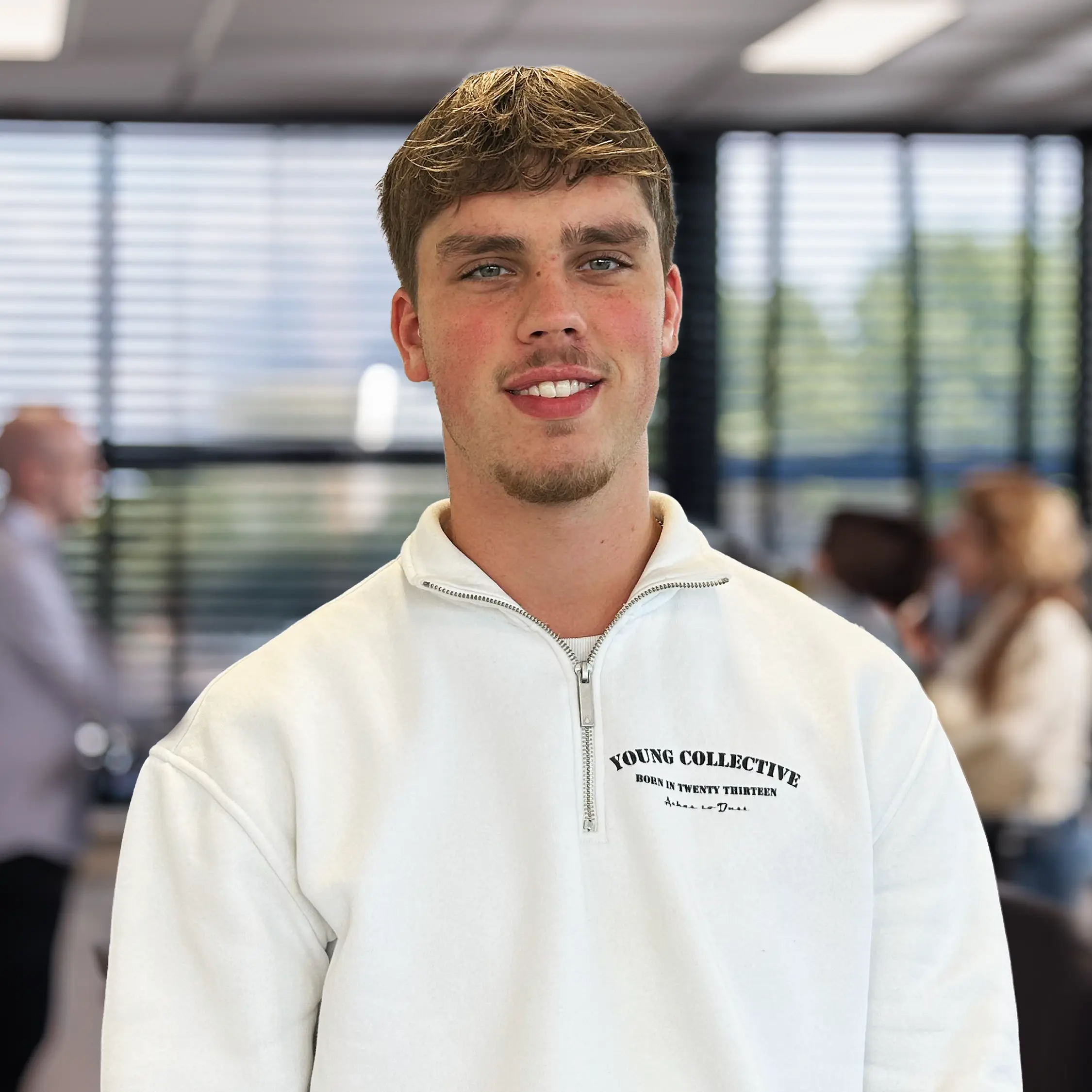
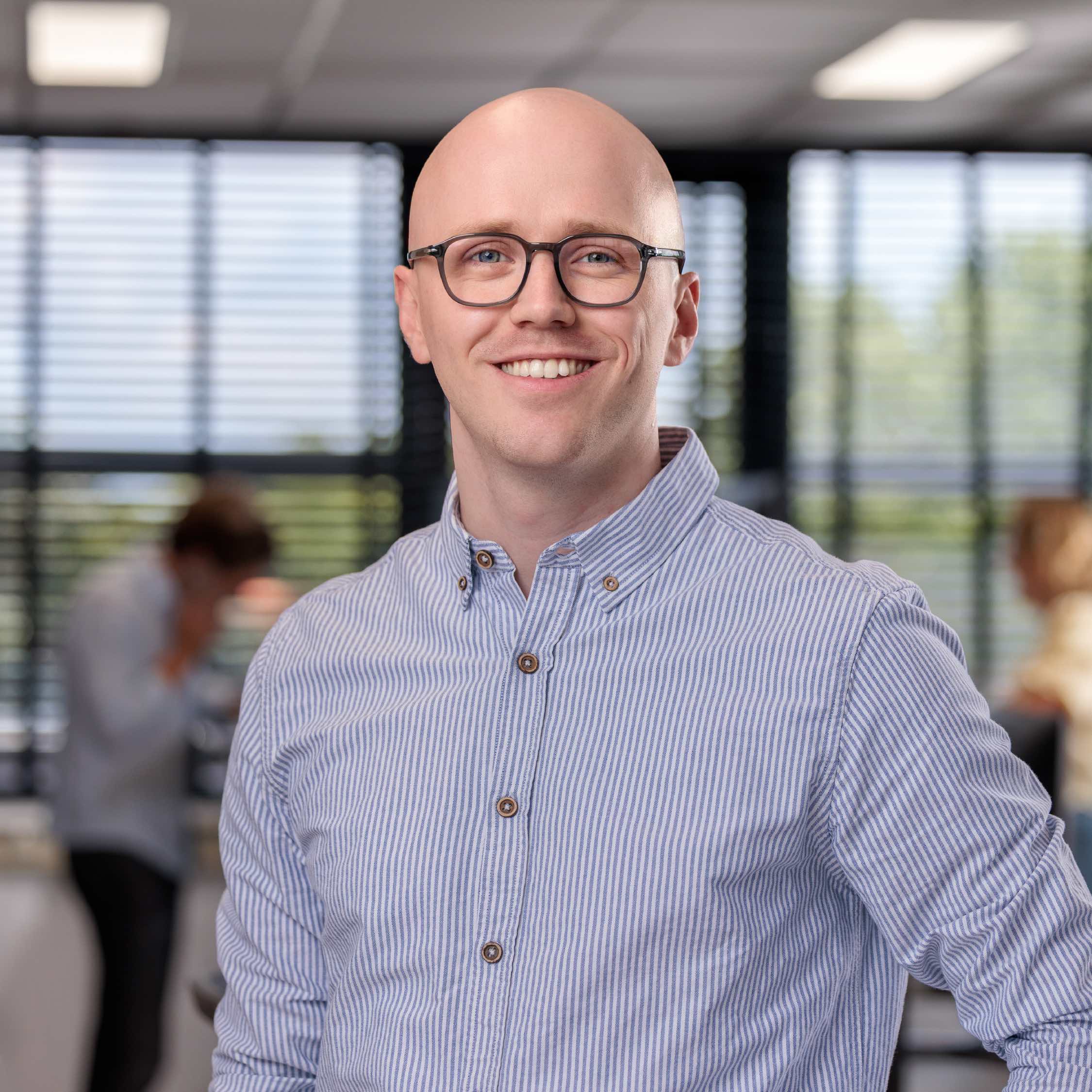
A fixed trio on every website engagement. Sander leads the design and guards the system, Dante writes the copy and contributes to module builds, Carsten handles the architecture and the CMS-CRM connection. No freelancers in and out, no translation loss between design and development.

Questions we get often, with answers you can use to bring your MT or CFO on board.
Primarily yes, we are a HubSpot Platinum Partner and the advantage of CMS plus CRM on one platform is significant for B2B. But we are not dogmatic. For clients with a healthy WordPress site we often use a hybrid setup: WordPress for corporate content, HubSpot for landing pages, forms and CRO. We also guide headless setups, provided the business case stacks up.
A complete B2B website from strategy to launch runs 10 to 16 weeks. Strategy and UX 2 to 3 weeks, design 2 to 3 weeks, development 4 to 6 weeks, content and launch 2 to 4 weeks. With a clear scope and existing brand guidelines it can be faster. Multi-language or complex integrations add 4 to 8 weeks.
Our engagements are bespoke. The price depends on the number of templates, languages, content scope and the integrations with your CRM and tools. Many clients choose a RevOps-as-a-Service retainer where the build continues into CRO and ongoing development. Book a call and we will scope it to your situation.
We prefer not to. We too often see a beautiful Figma file being hollowed out in an external development step: animations disappear, spacing shifts, modules get fields they never asked for. That is why we do design and development in one team. If you genuinely only need design, we can do that on the condition that we review the development partner upfront.
First an editorial review: what stays, what gets rewritten, what disappears. Then a URL mapping and 301 redirect plan so your organic rankings are preserved. The migration itself we do via HubSpot import templates, with spot-check QA per template. Allow 2 to 4 weeks for a site of 30 to 60 pages.
AEO is Answer Engine Optimisation, optimisation for AI search such as ChatGPT, Perplexity and Google AI Overviews. Since 2026, AEO, GEO and classic SEO run as one discipline. AI Overviews suppress click-through on classic positions, so your content also needs to be citable. Structured data, sharp Q and A blocks and clear page structure are the foundation. We build every page AEO-ready.
Then you do not rebuild. We see clients with well-maintained WordPress sites and no reason to tear them down. We do an audit on performance, SEO technique, forms and CRM connection, and build new landing pages or campaign pages in HubSpot on top where needed. The Maturity Scan gives an initial indication of whether a rebuild is genuinely necessary.
Yes, ongoing work is done in a RevOps-as-a-Service retainer or on an hourly basis. Quarterly check on performance and SEO technique, ongoing A/B tests on the most important pages, and new landing pages for campaigns. A website that does not grow with you drops in ranking and conversion every quarter.
Book a 30-minute conversation. We look at your current site, conversion figures and performance together, and determine where the greatest lever lies in your situation. Sometimes that is a rebuild, often it is a targeted refactor and an ongoing CRO cadence.
Want to do your own baseline measurement first? Take the Maturity Scan, and we will use the outcome as the starting point in the conversation.