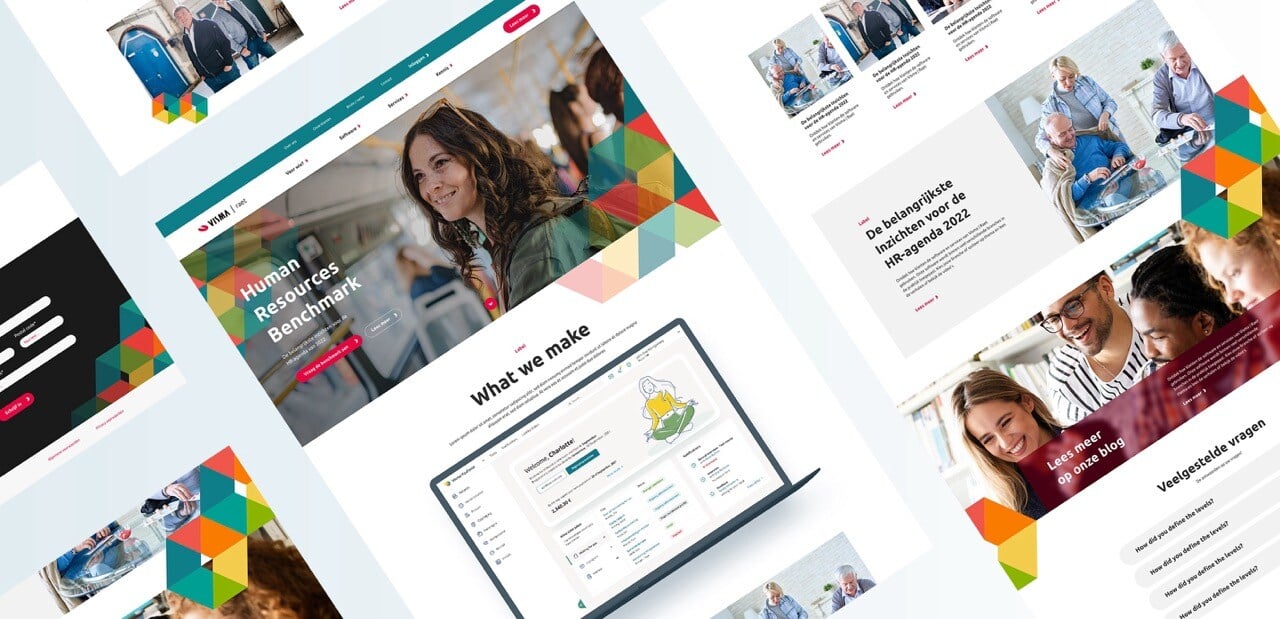
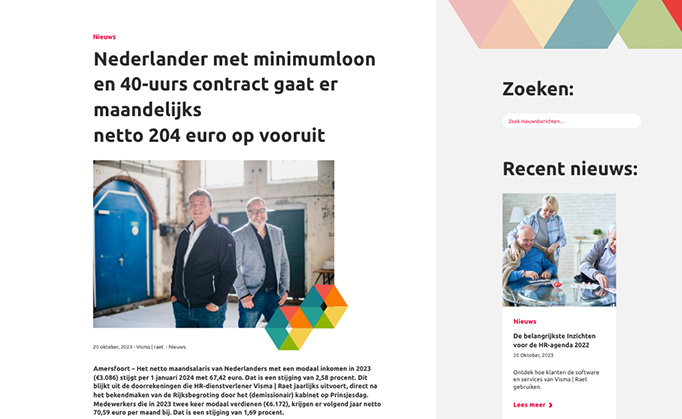
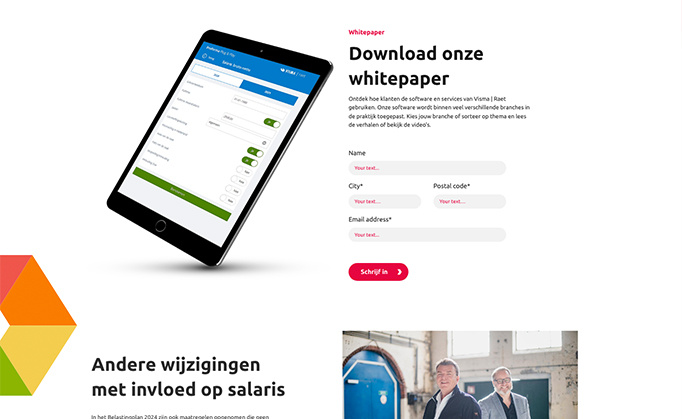
A new brand identity calls for a new website for Visma Raet
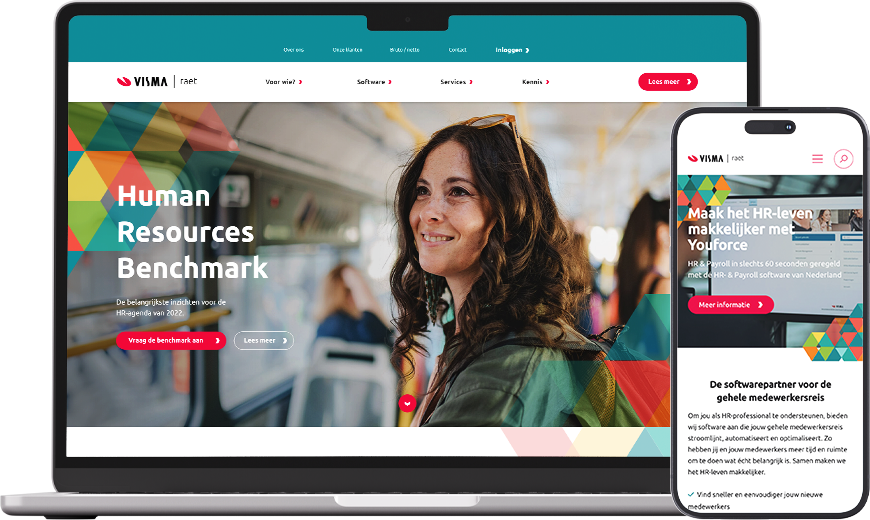
Visma Raet is the software partner for the entire employee journey. They make HR life easier with Youforce. And with the HubSpot CMS, we make life easier for Visma Raet, because the website is easy to manage. Think of the drag-and-drop editor and independence from a developer.
drag-and-drop editor
into your customer journey
updates
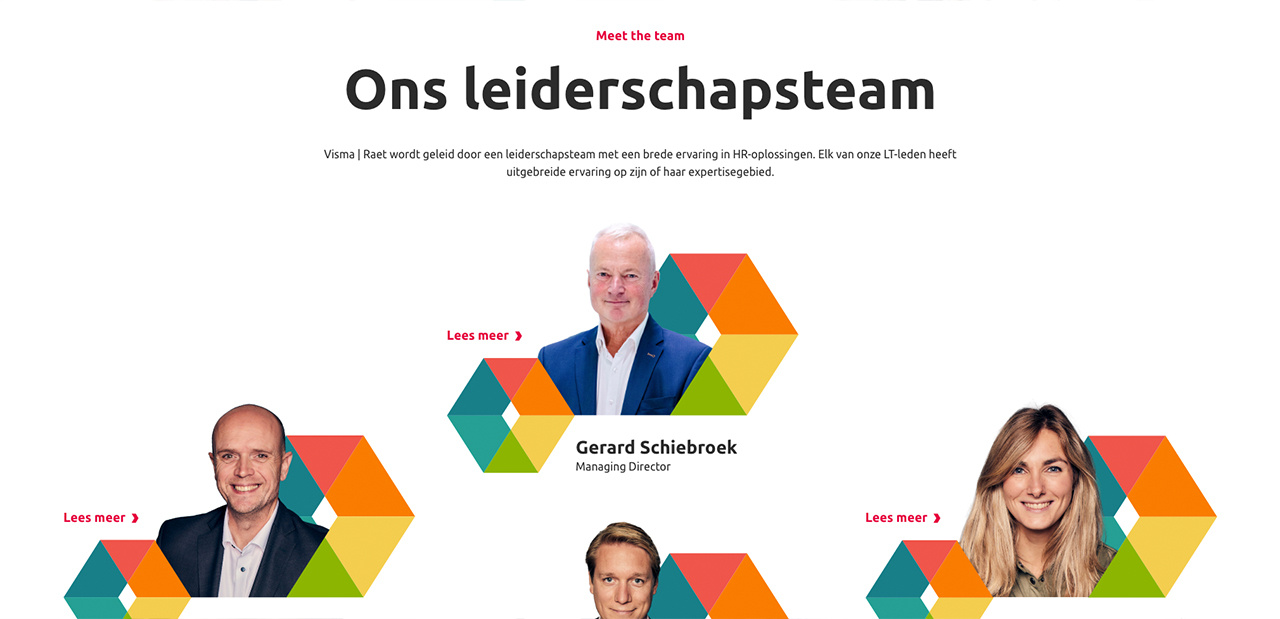
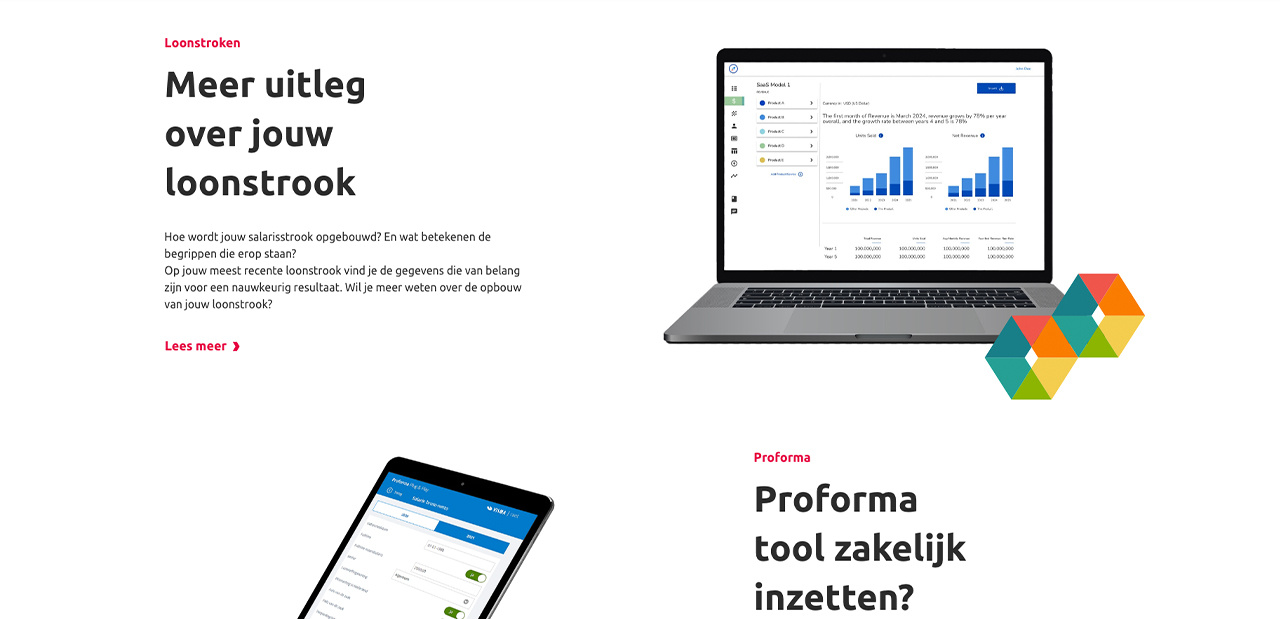
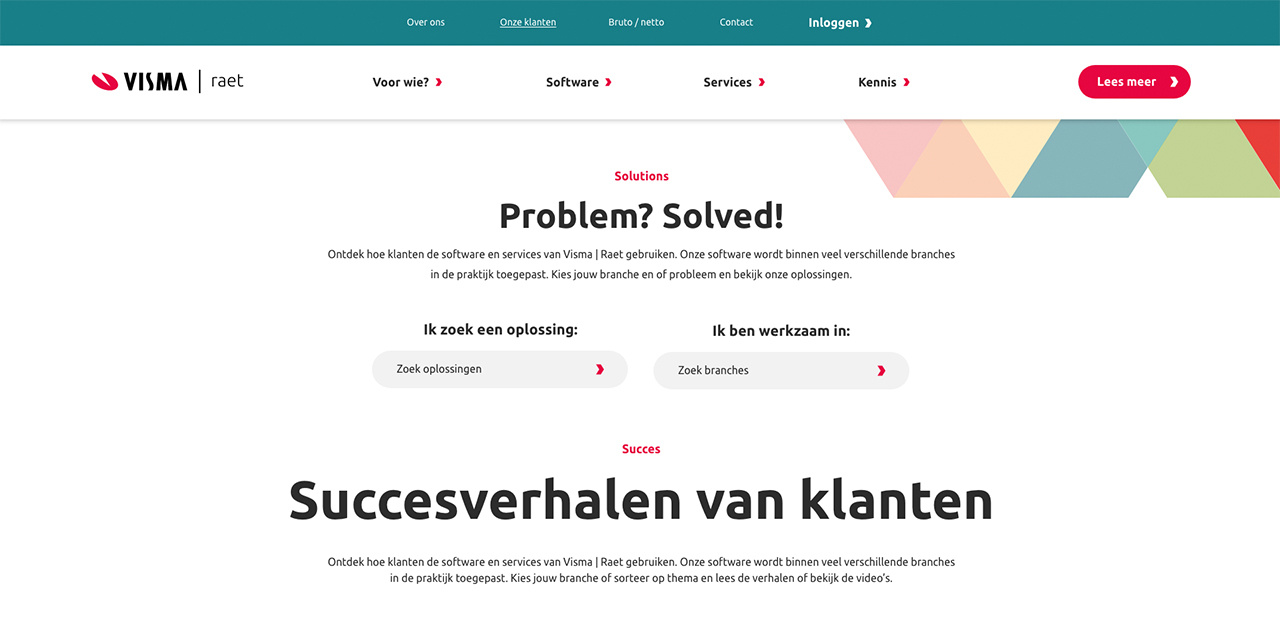
A fresh, functional website
The request came from Visma Raet to create a new website within the HubSpot CMS. At that time, they were running a website on a different CMS, with history already built up. It was therefore important that the migration was well prepared and carried out with precision. This ensures that this history, in the form of search rankings within search engines, is not lost. In addition, they had recently developed a new brand identity that they wanted to see reflected in the design of the website. Our task was to take these ingredients and build a fresh, functional website.
Automation & personalisation
The ideal combo: Marketing Hub & CMS Hub
Before switching to the HubSpot CMS, Visma Raet already used Marketing Hub Enterprise. With this hub, they can work with Custom Events, Customer Journey Analytics, multi-touch revenue attribution and much more. Connecting the CMS Hub to that creates a holistic view of all touch points, and gives you the option to use smart content right away. This lets you show a different message to your customers, leads or, for example, MQLs. Add an A/B test on top of that and you get a personalised approach that you can continuously monitor and keep improving. With these building blocks, Visma Raet has now set out to deliver a unique and functional experience.
Tight planning & maximum results
With a strategic approach and a clear step-by-step plan, we always deliver our websites with a clear goal in mind. This strengthens the synergy between design, development and marketing to achieve maximum results. How do we do that? We can explain it in 5 steps.
A website project starts with mapping out the wireframes. In this essential step, it is important to have input in the form of user stories and to have a clear picture of the website’s goal. Wireframing is essentially about creating a sketch of the website that shows the basic structure of the pages. At this stage, we leave out all design elements such as colours or images. It is purely about the purpose of the pages. The resulting wireframes help our designers focus on the user experience (UX) by making the navigation and interaction on the website easy to understand. During this phase, we continuously check whether the page layout works for the visitor. Ultimately, this phase also drives efficiency in the rest of the project. The clearer we can set out the wireframes, the smoother the process runs afterwards.
After the wireframing phase, we have a functional blueprint that our designers can work from. This is the moment when the visual elements and aesthetics of the website come to life. We start by adding colours, typography and other elements to shape the pages. We take into account spacing, line heights, contrast and many other elements that affect how the website works. On top of that, we now have to deal with a wide range of devices. The website needs to be easy to use on every screen size, and that sometimes requires small adjustments to the design to achieve a good result. In the end, we create a working design, giving us a clickable ‘prototype’ of the website. This allows you to check together whether everything meets your wishes.
The development phase is where things get even more interesting. The visual and interactive design is turned into a working website. Besides becoming tangible, this phase is also hugely important. We start by coding the website in a test environment. This keeps the website out of reach of search engines or other external parties for now. Front-end and back-end development work together to turn the designs into HTML, CSS and/or JavaScript, as well as to set up the server side properly. In this phase, we also test extensively whether the design actually works well on all devices. We also run tests on the website’s performance, such as page speed and health score tests. Naturally, it is important that your website is delivered securely, so we pay attention to SSL, security protocols and any software updates that are needed.
Once the development phase is complete, the right content of course needs to be shown on the pages. This is a phase that can lie entirely with the client, but can also be partly or fully handled by Addmark. Either way, it is crucial to think carefully about any redirects in advance. You do not want to lose valuable rankings in search engines during a migration because redirects are missing. By running a thorough scan of the current website, we map out the existing redirects and combine these with any new redirects that are needed. We also take into account meta titles and descriptions, internal links, URL structure, breadcrumbs, compressed images, ALT texts and other content-related matters. This makes your website instantly SEO-proof, so it gets properly indexed by Google, Bing or other search engines.
The final phase has arrived: go-live! The content is in place, the migration plan is fully thought through and ready to be carried out. We choose a moment in the week when visitor numbers are lowest. This keeps the impact on visitors as low as possible and allows the migration to be handled carefully. It is also important that everyone involved is ready for any setbacks, so we can act quickly if needed. Once the redirects are loaded, the handover to the main domain can begin. Once the migration is complete, we test the entire website once more. We make sure all buttons work as expected, all links point to the correct domain, and no strange 404s or redirect loops have appeared. Finally, we test the page speed and the overall health score of the website again, so that everything truly works well and the website officially joins the world wide web.
A website project starts with mapping out the wireframes. In this essential step, it is important to have input in the form of user stories and to have a clear picture of the website’s goal. Wireframing is essentially about creating a sketch of the website that shows the basic structure of the pages. At this stage, we leave out all design elements such as colours or images. It is purely about the purpose of the pages. The resulting wireframes help our designers focus on the user experience (UX) by making the navigation and interaction on the website easy to understand. During this phase, we continuously check whether the page layout works for the visitor. Ultimately, this phase also drives efficiency in the rest of the project. The clearer we can set out the wireframes, the smoother the process runs afterwards.
After the wireframing phase, we have a functional blueprint that our designers can work from. This is the moment when the visual elements and aesthetics of the website come to life. We start by adding colours, typography and other elements to shape the pages. We take into account spacing, line heights, contrast and many other elements that affect how the website works. On top of that, we now have to deal with a wide range of devices. The website needs to be easy to use on every screen size, and that sometimes requires small adjustments to the design to achieve a good result. In the end, we create a working design, giving us a clickable ‘prototype’ of the website. This allows you to check together whether everything meets your wishes.
The development phase is where things get even more interesting. The visual and interactive design is turned into a working website. Besides becoming tangible, this phase is also hugely important. We start by coding the website in a test environment. This keeps the website out of reach of search engines or other external parties for now. Front-end and back-end development work together to turn the designs into HTML, CSS and/or JavaScript, as well as to set up the server side properly. In this phase, we also test extensively whether the design actually works well on all devices. We also run tests on the website’s performance, such as page speed and health score tests. Naturally, it is important that your website is delivered securely, so we pay attention to SSL, security protocols and any software updates that are needed.
Once the development phase is complete, the right content of course needs to be shown on the pages. This is a phase that can lie entirely with the client, but can also be partly or fully handled by Addmark. Either way, it is crucial to think carefully about any redirects in advance. You do not want to lose valuable rankings in search engines during a migration because redirects are missing. By running a thorough scan of the current website, we map out the existing redirects and combine these with any new redirects that are needed. We also take into account meta titles and descriptions, internal links, URL structure, breadcrumbs, compressed images, ALT texts and other content-related matters. This makes your website instantly SEO-proof, so it gets properly indexed by Google, Bing or other search engines.
The final phase has arrived: go-live! The content is in place, the migration plan is fully thought through and ready to be carried out. We choose a moment in the week when visitor numbers are lowest. This keeps the impact on visitors as low as possible and allows the migration to be handled carefully. It is also important that everyone involved is ready for any setbacks, so we can act quickly if needed. Once the redirects are loaded, the handover to the main domain can begin. Once the migration is complete, we test the entire website once more. We make sure all buttons work as expected, all links point to the correct domain, and no strange 404s or redirect loops have appeared. Finally, we test the page speed and the overall health score of the website again, so that everything truly works well and the website officially joins the world wide web.
Projects we are proud of!
Automatisch cadeaus versturen met HubSpot en Thanqs
Operational Excellence met HubSpot en ClickUp bij Frame Offices
HubSpot verbindt data, teams en systemen bij Special Cargo
Een moderne website die vertrouwen en persoonlijkheid uitstraalt
BTS Logistics navigeert naar commerciële efficiëntie
Want to know how HubSpot can help you?